

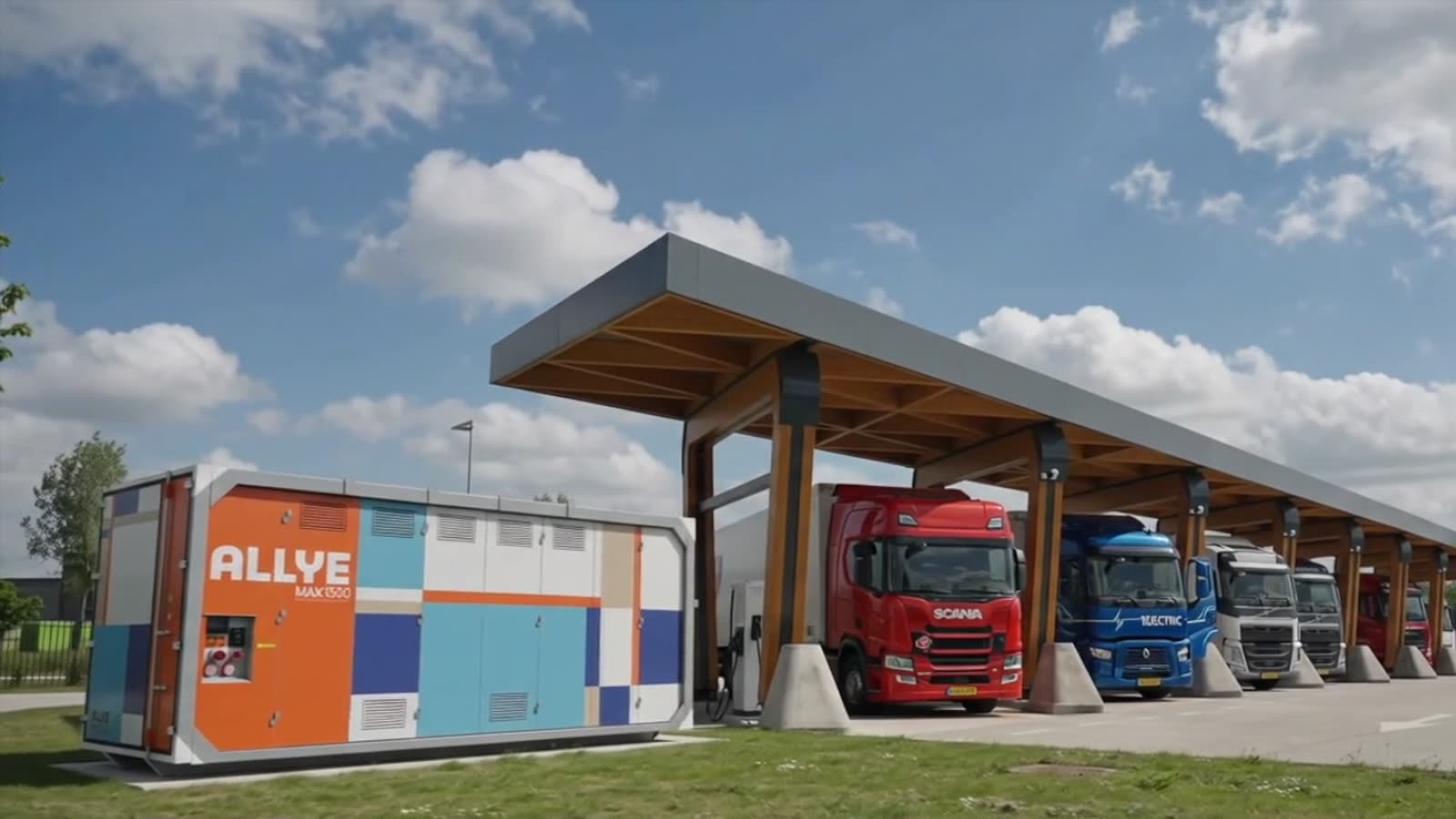
Your fleet is ready to go electric. Your grid connection isn't.
Charge your fleet. Skip the grid upgrade.
Battery-buffered DC fast charging, up to 1.28MW, from the supply you already have.
The problem
The grid is the bottleneck, not the vehicles
Fleets need a lot of power for a few hours. Grid upgrades are sized, priced and timed for neither.
On and off-grid Depots, hubs, vans, trucks and buses
Years to wait
New connections take 1 to 3 years, and up to 15 for some fleets.
Costly upgrades
UK site upgrades cost £150k to £3m, averaging around £500,000.
Short, sharp peaks
Vehicles charge in tight windows, so high power is needed briefly.
Diesel stopgaps
Generators bridge the gap at a cost, and undo the point of going EV.
How it works
A buffer between the grid and your vehicles
MAX stores energy slowly from a small supply and delivers it fast when vehicles plug in.
Store
Charge steadily from three- or single-phase supplies, from 16A.
Charge
Two DC outlets deliver 60kW to 1.28MW, plus AC, to any vehicle.
Move
Redeploy as depots change, with no pad, fencing or groundworks.
Two ways to charge
Buffer your chargers, or charge standalone.
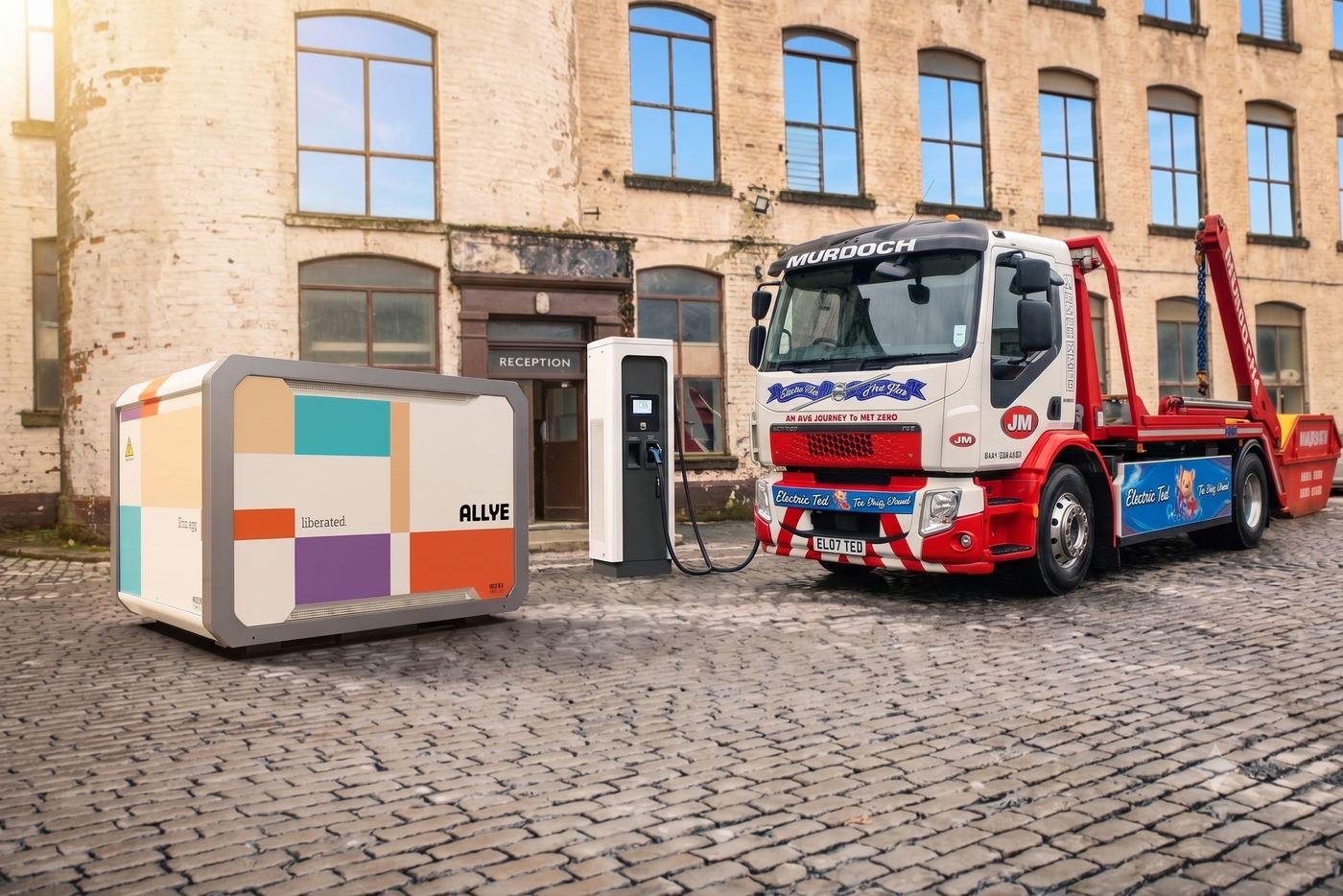
Buffer your chargers
MAX charges from a small supply and runs new or existing chargers at full speed.
J&M Murdoch: DC fast charging from 32A. £300k grid upgrade deferred, live in a day.
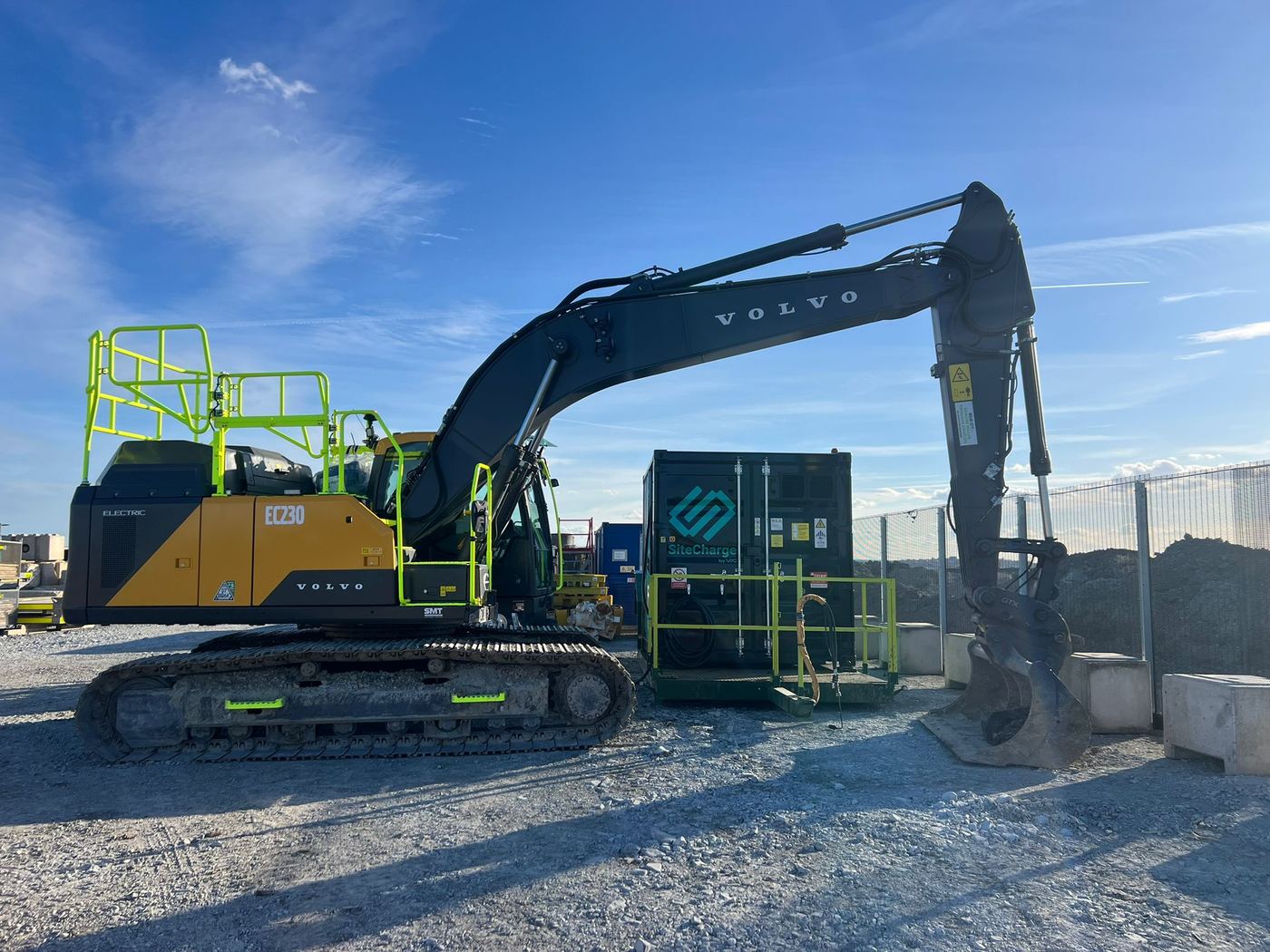
Charge standalone
Chargers built into MAX, recharged from a DC charger, another MAX or a generator.
Lower Thames Crossing: four MAX500s charge excavators, no grid. Over £30k a week saved.
Each DC charger has two outlets. The power quoted is the total, shared when two vehicles plug in.
Save £300,000 upfront
and start electrifying years sooner, at J&M Murdoch's Glasgow depot, deployed in one day
| Average UK site grid upgradeRange £150k to £3m | £500,000 |
| Typical wait for a connectionUp to 15 years | 1 to 3 years |
| Grid capacity neededWith a battery buffer | 50 to 80% less |
Sources: Allye case studies; SMMT (May 2025); US Joint Office of Energy and Transportation and NREL (June 2024).
Charging
From vans to 44-tonne trucks
DC charging from 60kW to 1.28MW, with two outlets so two vehicles charge at once.
Specify your preferred brand of charger, and we do the integration.
Why MAX
Made for depots
Fits where you are
MAX300 is under 2m and fits a parking bay. No pad, fencing or groundworks.
Running in minutes
Pre-commissioned in our factory: plug in and go. Parallel units for more power.
Software that learns your site
Machine learning predicts load and AI schedules every half hour of charging and discharging.
Open to the markets
Open API for third-party optimisers, so MAX earns from grid flexibility and wholesale prices.
Lower-carbon hardware
Built in Britain from EV batteries already on our roads: 60% lower embedded CO2 than new cells.
Safe and supported
CE and UKCA marked, every cell monitored 24/7, supported by the UK engineers who built it.
Proven
Already keeping the power on across the UK
J&M Murdoch
DC fast charging from a 32A supply, deferring a £300k grid upgrade
Read the case study →Construction, EnglandCollins Earthworks
Charging electric trucks from a 125A supply, saving £2,500 a week
Read the case study →Construction, EnglandLower Thames Crossing
Four MAX500s charging excavators off-grid: over £30k a week saved
Read the case study →Recommended
The MAX for this job

MAX300
- Capacity
- 328kWh
- Continuous power
- 88, 140 or
280kW - DC charging
- up to 400kW
Under 3.5t on its trailer, towed on a standard licence.
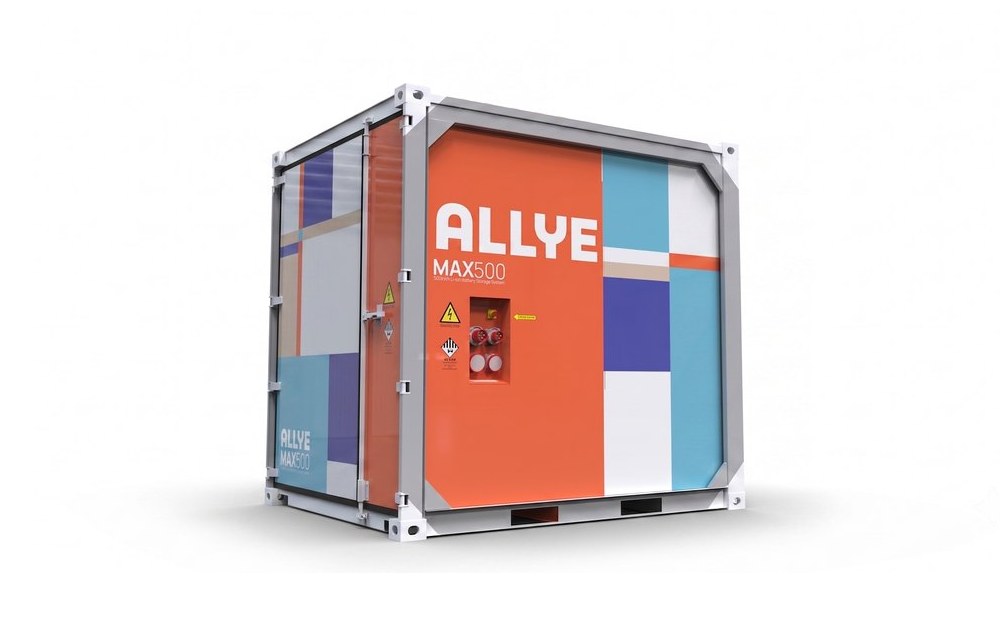
MAX500
- Capacity
- 492kWh
- Continuous power
- 210 or
420kW - DC charging
- up to 480kW
Compact 10ft footprint, lifted into place on any site.
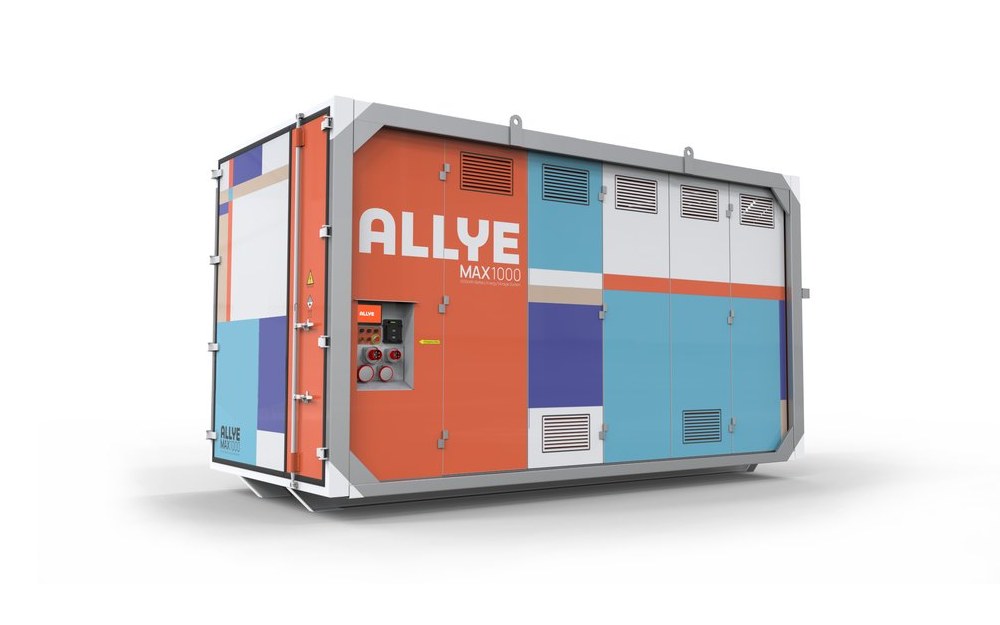
MAX1000
- Capacity
- 984kWh
- Continuous power
- 420 or
840kW - DC charging
- up to 1.28MW
Drop and Go from a hooklift truck in under two minutes.
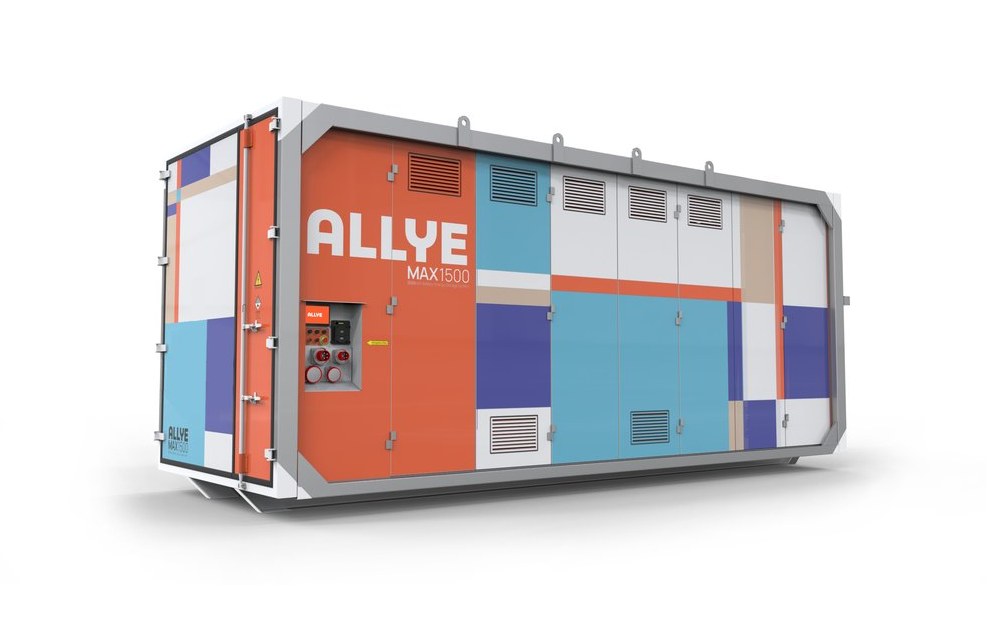
MAX1500
- Capacity
- 1,476kWh
- Continuous power
- 630 or
1,260kW - DC charging
- up to 1.28MW
Our highest power, Drop and Go in a 20ft footprint.
FAQ
Questions buyers ask
Can MAX charge EVs without a grid upgrade?
Yes. MAX stores energy slowly from the supply you already have, even a 32A connection, and delivers it at high power when vehicles plug in. J&M Murdoch runs DC fast charging from a 32A supply and deferred a £300k grid upgrade.
How much charging power can MAX deliver?
DC charging runs from 60kW up to 1.28MW across the range, with two outlets: MAX300 up to 400kW, MAX500 up to 480kW, MAX1000 and MAX1500 up to 1.28MW. MAX300 and MAX500 add 4 x 22kW AC. The power quoted is the total, shared when two vehicles plug in.
Can MAX power the chargers we already have?
Yes. As a buffer, MAX boosts satellite chargers on site, or charges vehicles directly from its own outlets.
Does MAX need a grid connection at all?
No. Off-grid, MAX recharges from any public or depot DC charger, another MAX or a generator. At Lower Thames Crossing, four MAX500s charge electric excavators with no grid connection.
Electrify your depot this year
Tell us your vehicles, duty cycles and supply. We'll size the charging and show what it saves against a grid upgrade.
- A free depot charging model
- A comparison against your grid upgrade quote
- The full MAX brochure and specifications
sales@allye.com+44 (0)20 805 06560