

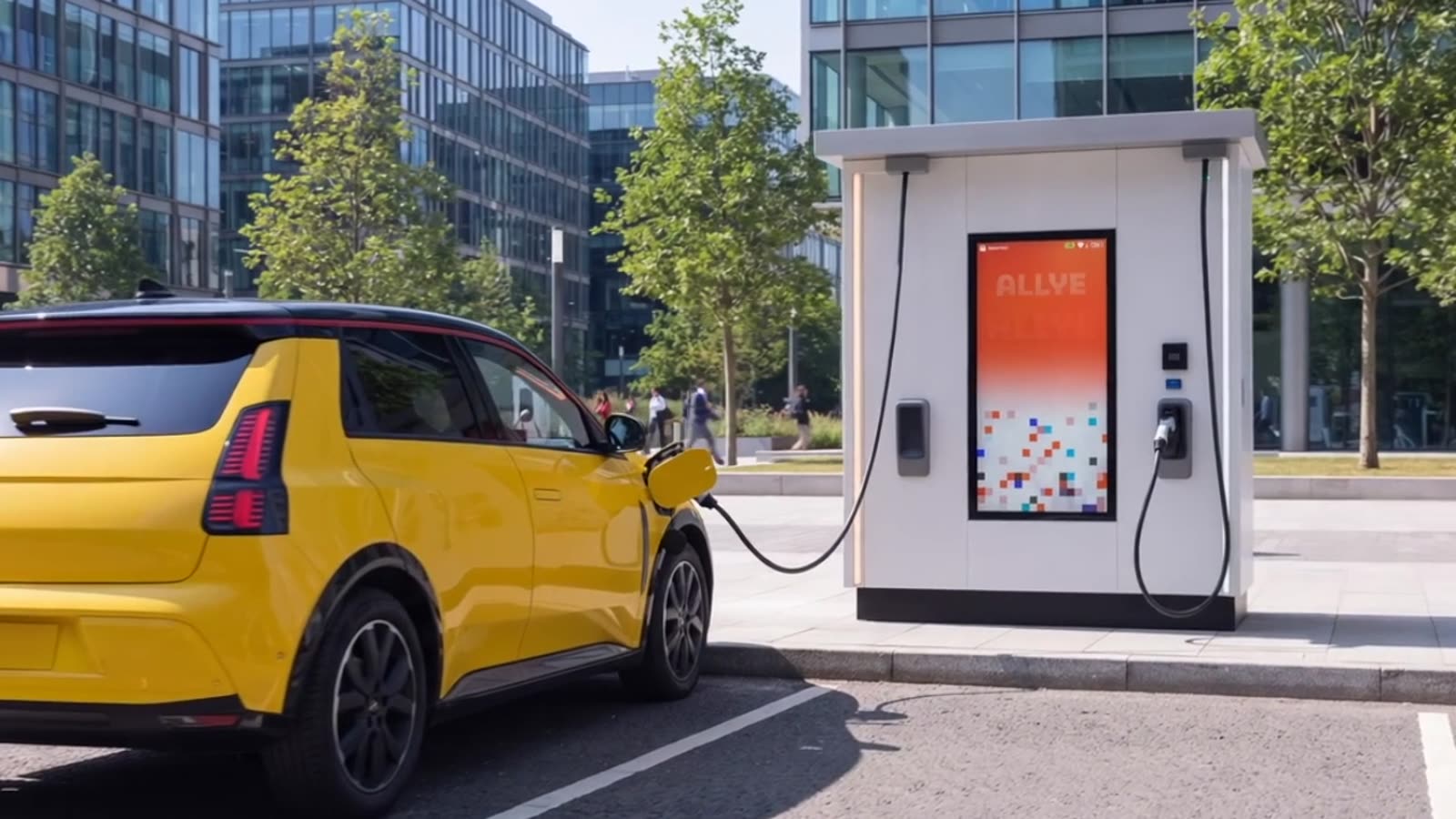
The MEV range · Battery-buffered charging
Charge your fleet where it parks.
Rapid chargers, 200 or 300kW, that recharge from the supply you already have. No grid upgrade.
The problem
Short of power, not energy.
Most depots are not short of energy: vehicles stand for hours between shifts. What they lack is the power to deliver that energy quickly, and a new connection takes 18 to 36 months.
Store slowly
MEV recharges its battery from the supply the depot already has, from 16A to 125A three-phase.
Charge fast
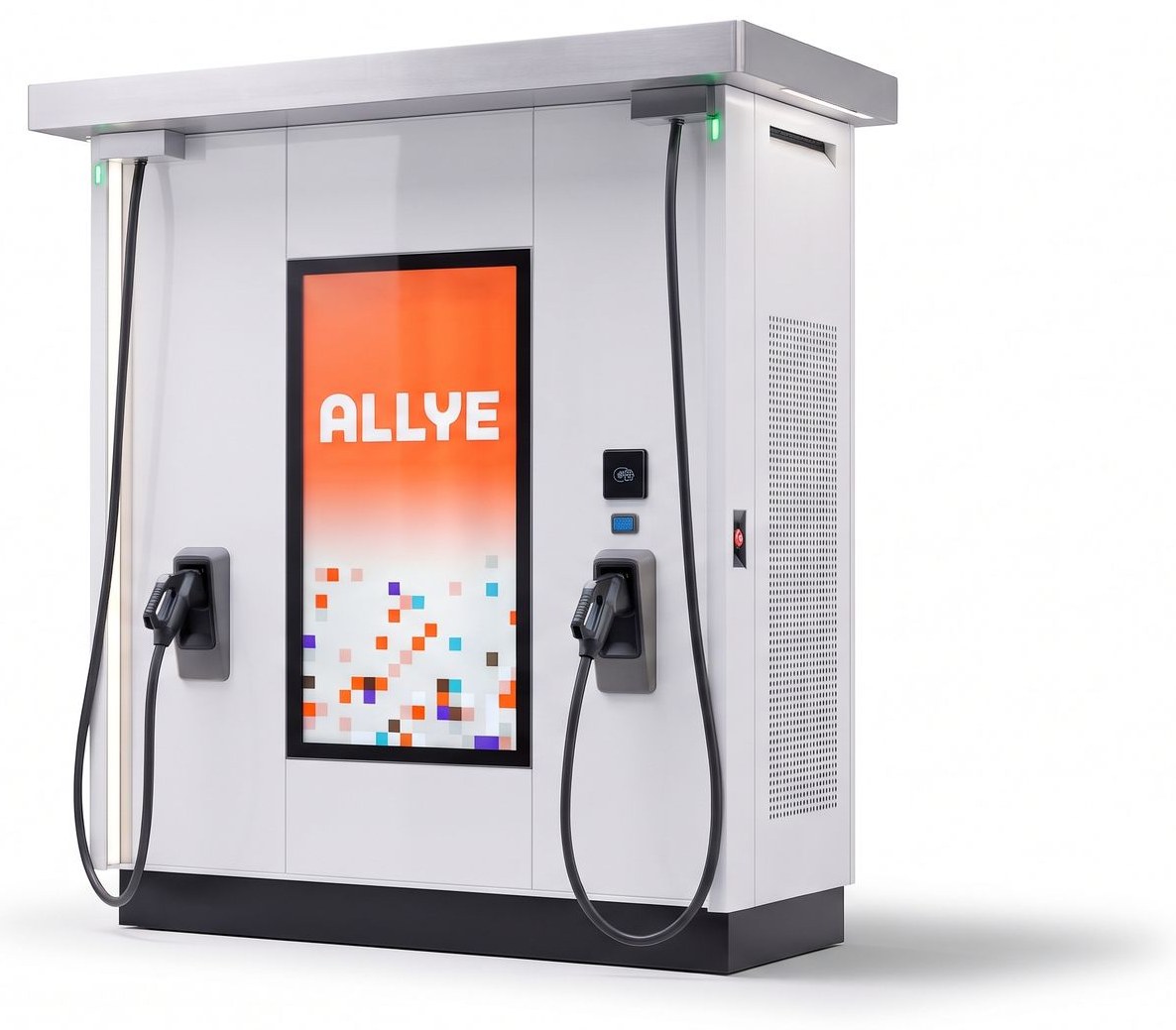
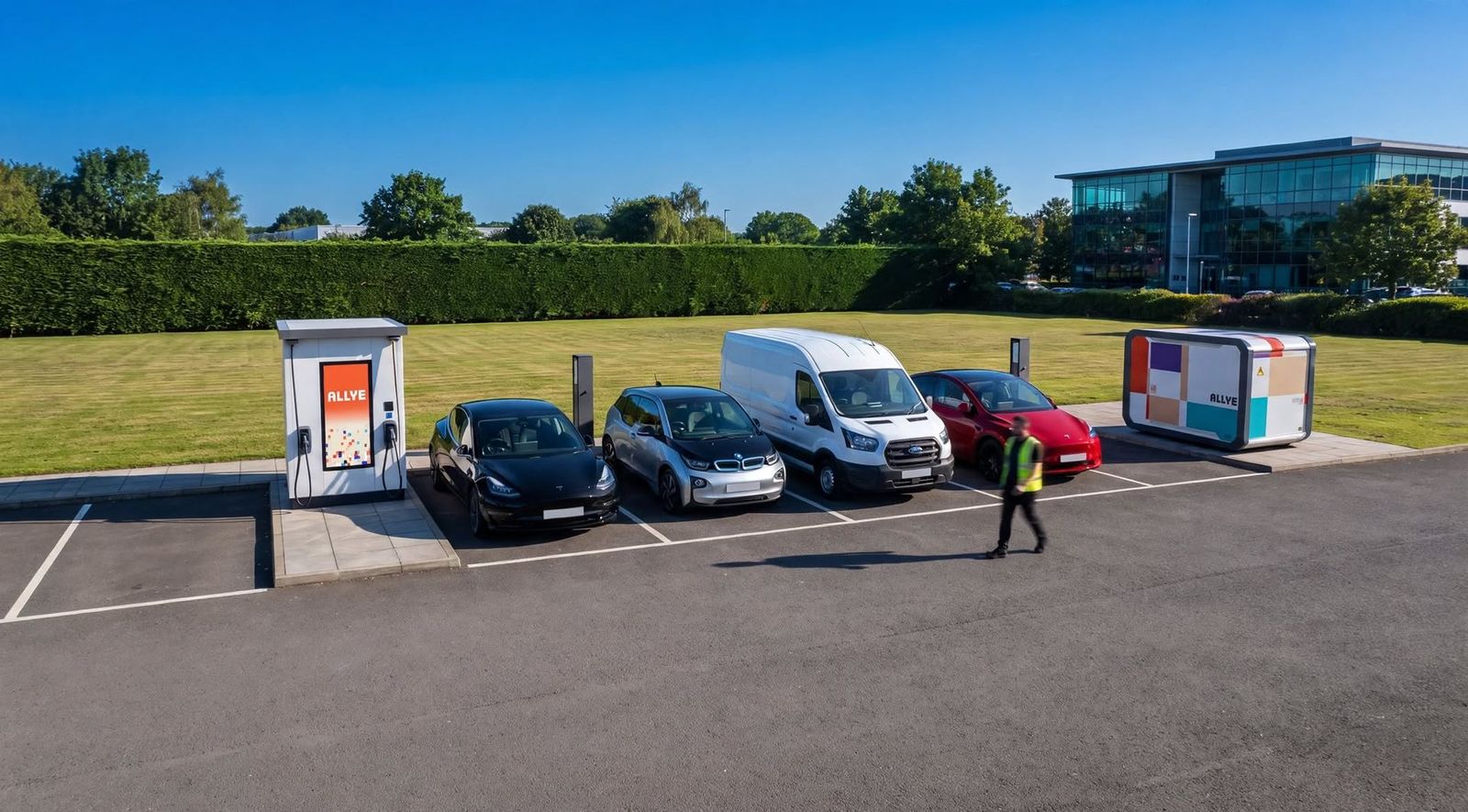
It releases that energy at up to 300kW through two CCS2 connectors, to one vehicle or shared across two.
Earn when idle
Between sessions it can export, trade and earn from grid services, subject to network approval.
The range
Two models. One cabinet.
Both share the same cabinet and footprint. A MEV200 can become a MEV300 later by adding a third pack on site.
MEV200
Depots with vans, cars and pool vehicles that return to base, on a supply of 32A three-phase or less.
- DC charging
- 200kW
- Capacity
- 155kWh
- Supply
- 16A to 125A 3ph
- Single-phase
- Option
MEV300
Busier depots, larger vans and trucks, and sites with a 63A or larger supply.
- DC charging
- 300kW
- Capacity
- 232kWh
- Supply
- 16A to 125A 3ph
- Single-phase
- Option
Why MEV
More than a charger.
A standalone rapid charger needs a connection big enough to feed it. MEV brings its own battery, so it needs only the supply you already have.
| Allye MEV | Standalone rapid charger | |
|---|---|---|
| Supply needed | 16A to 125A three-phase, with a single-phase option | A connection sized for the charger: about 200kVA for 200kW |
| Grid upgrade | None: MEV recharges from the supply you have | Often needed; a new depot connection takes 18 to 36 months |
| Time to first charge | Installed in hours, charging the day it arrives | Months of network works and civils |
| Capacity charges | No increase | Paid every year on the bigger connection |
| Evening peak | Charges from its own battery and recharges off-peak | Draws from the grid at peak rates |
| When idle | Exports and earns from grid services, subject to network approval | Earns nothing |
| If you move | Unbolt it, lift it out and re-site it | Fixed infrastructure stays behind |
| Batteries | Repurposed EV packs | None |
| Ten-year cost | Designed to save £50,000 to £110,000 against a conventional 200kW charger | Lower to buy, more to own |
The standalone column describes a typical grid-connected 200kW DC rapid charger. The ten-year comparison excludes VAT and energy costs common to both, and includes round-trip losses and a mid-life pack refresh.
Lifetime cost
Pays for itself. Then keeps saving.
MEV draws a small, steady supply, so a depot avoids the bigger connection and the charges that come with it.
For a MEV200 to pay back against a conventional 200kW charger.
Designed saving over ten years against a conventional 200kW charger, before any grid upgrade it avoids.
Capacity charges avoided on an extra 200kVA connection (National Grid Electricity Distribution, South West, 2026/27).
Recharge off-peak, charge at the peak
MEV refills overnight at off-peak network rates and charges vehicles from its own battery during the weekday evening peak, when network charges are more than 100 times higher.
Earn when idle
MEV brings the MAX range's energy management to the charger. It can export to the grid, trade in the wholesale market and earn from grid services when it is not charging, subject to network approval.
Compares a MEV200 with a conventional 200kW charger over ten years, excluding VAT, net of round-trip losses and a mid-life pack refresh, and excluding energy costs common to both.
Benefits
Built for depots.
Fast charging from a small supply
MEV recharges its battery slowly from the supply you already have, from 16A to 125A three-phase, then charges vehicles fast.
Moveable for leased sites
Fixed in use, but it can be lifted out and re-sited if your business moves or a lease ends, so the investment moves with you.
Fire safety built in
A pyrotechnic fuse on every pack, off-gas detection and fire barriers as standard, with fire suppression for critical sites.

Installation
We take care of everything.
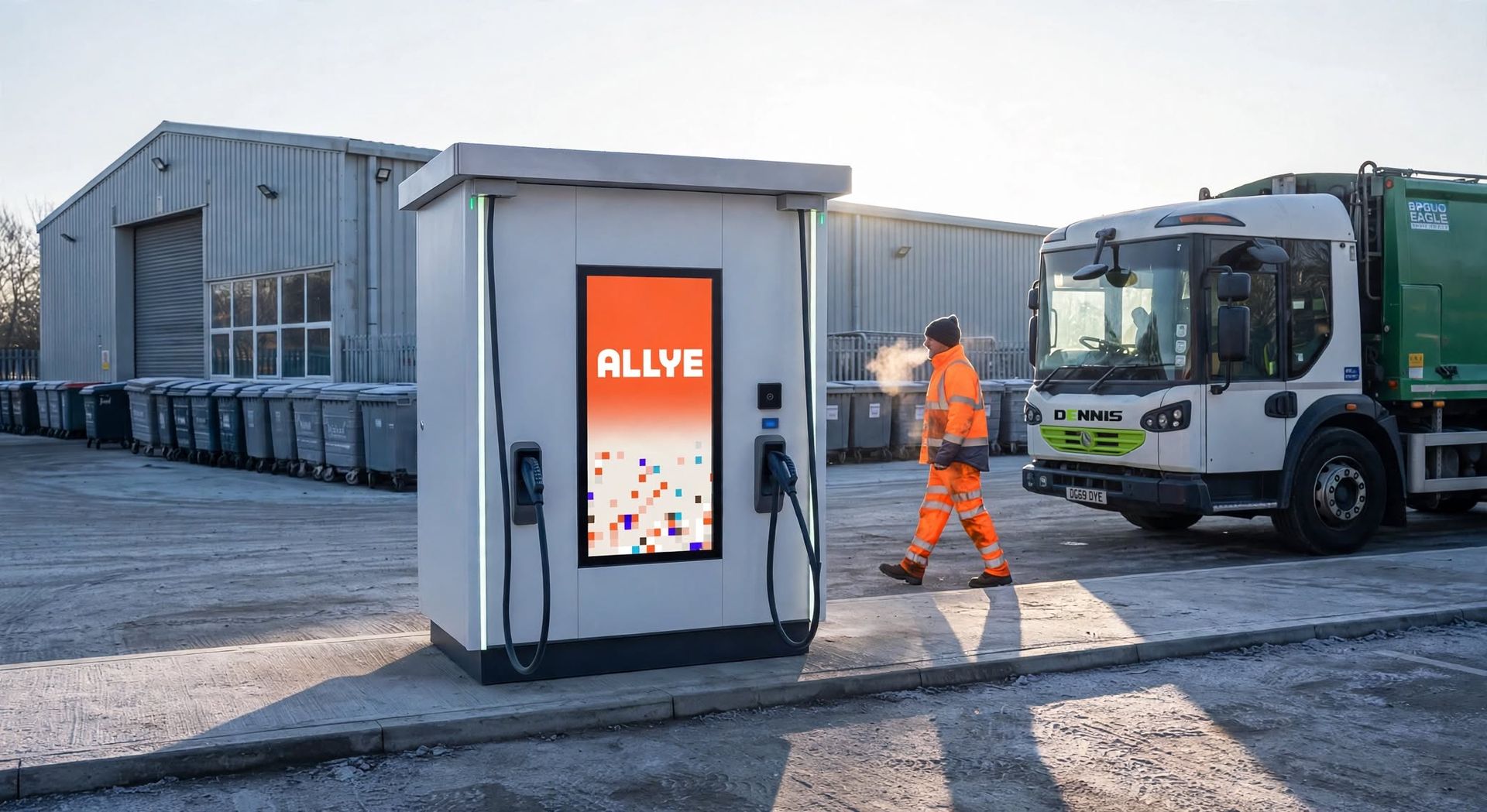
From the site check to the first charge, we do the work. There is very little for you to do, and your vehicles are charging within hours of delivery.
Site and planning
We review your site and supply, and handle any permissions needed.
Arrives ready
MEV arrives complete and tested, and we place it where your fleet parks.
Your existing supply
We connect it to the supply you already have and commission it on the day.
Charging in hours
Your vehicles start charging, and we monitor and support MEV from then on.
Inside MEV
Repurposed batteries, independent packs.
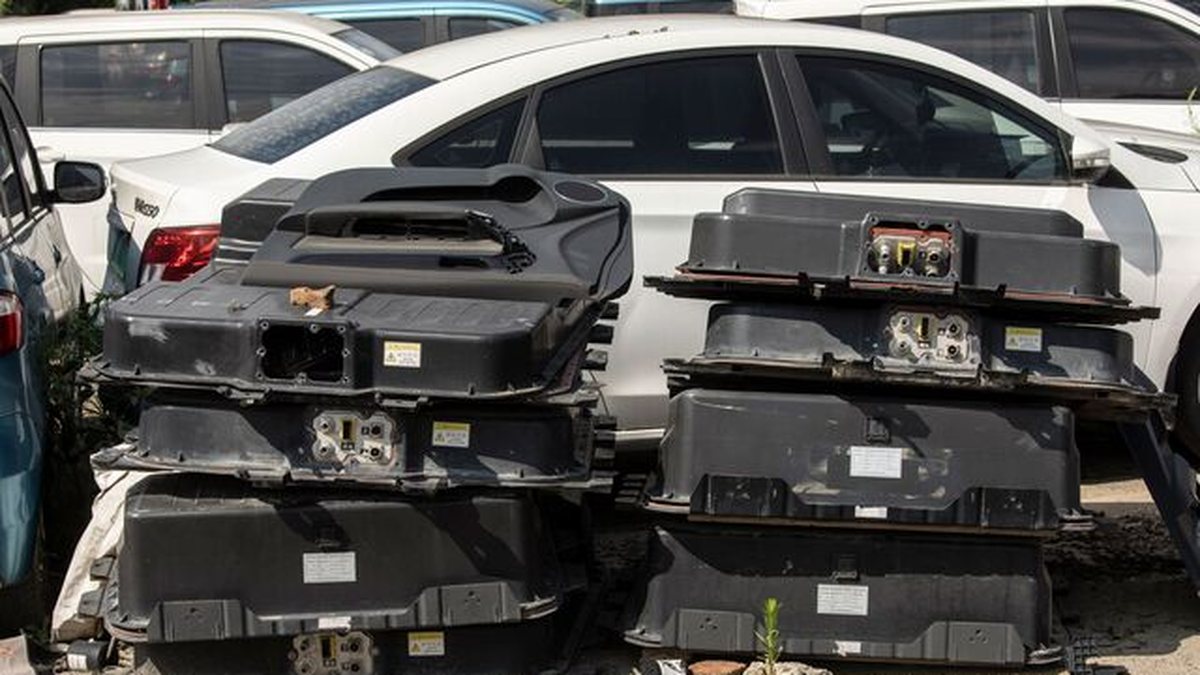
Each MEV holds two or three repurposed electric vehicle battery packs. Every pack keeps its own battery management, has its own converter and sits on its own slide-out carrier, so one can be serviced while the others keep charging.
- 800V, serving 400V and 800V vehicles
- Packs of mixed sizes, ages and chemistries
- Upgrade a MEV200 to a MEV300 on site
- An estimated 15 to 24t CO2e avoided per MEV
Two ranges, two jobs
One platform. Two ranges.
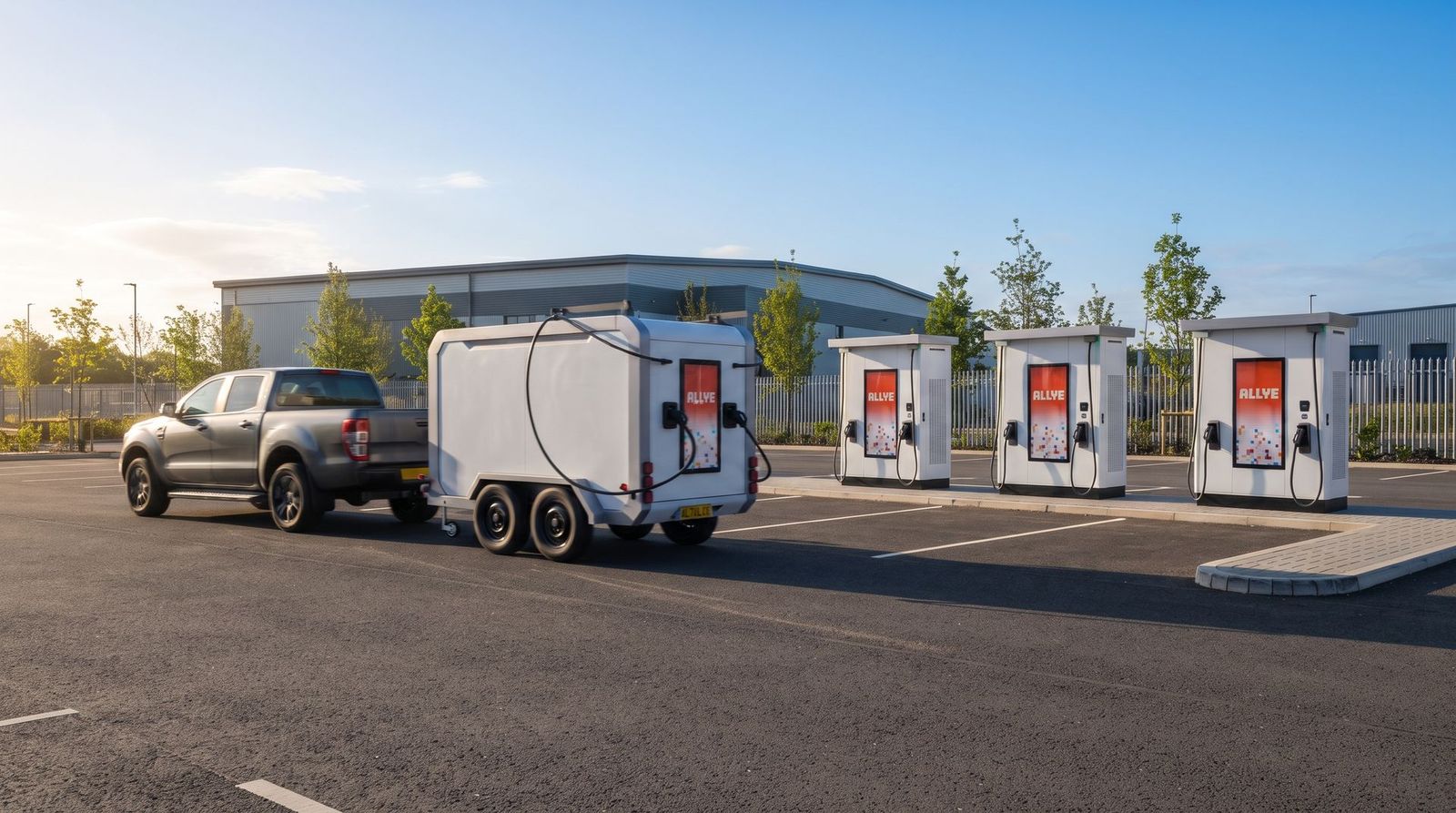
MAX powers anything, anywhere: battery energy storage that tows on its own trailer or stands in one place, powering sites, plant and chargers. MEV charges your fleet where it parks: a battery-buffered rapid charger that stays put at the depot and moves only if you do. Both work from the supply you already have.
| MAX300 | MAX300 with DC charging | MEV | |
|---|---|---|---|
| Job | Stores and supplies energy | Stores energy and charges vehicles | Charges vehicles |
| Moves | Towed on a standard car licence, or fixed | Towed on a standard car licence, or fixed | Fixed in use; lifted out and re-sited |
| Vehicle charging | Feeds separate chargers | Integrated, up to 400kW DC | Integrated, 200 or 300kW DC |
| Site power | Yes | Yes | No, charging only |
| Best for | Construction, events, film, sites that move | Temporary sites and mobile fleets | Depots and fleet bases |
Proven
Built on the MAX300, proven in service.
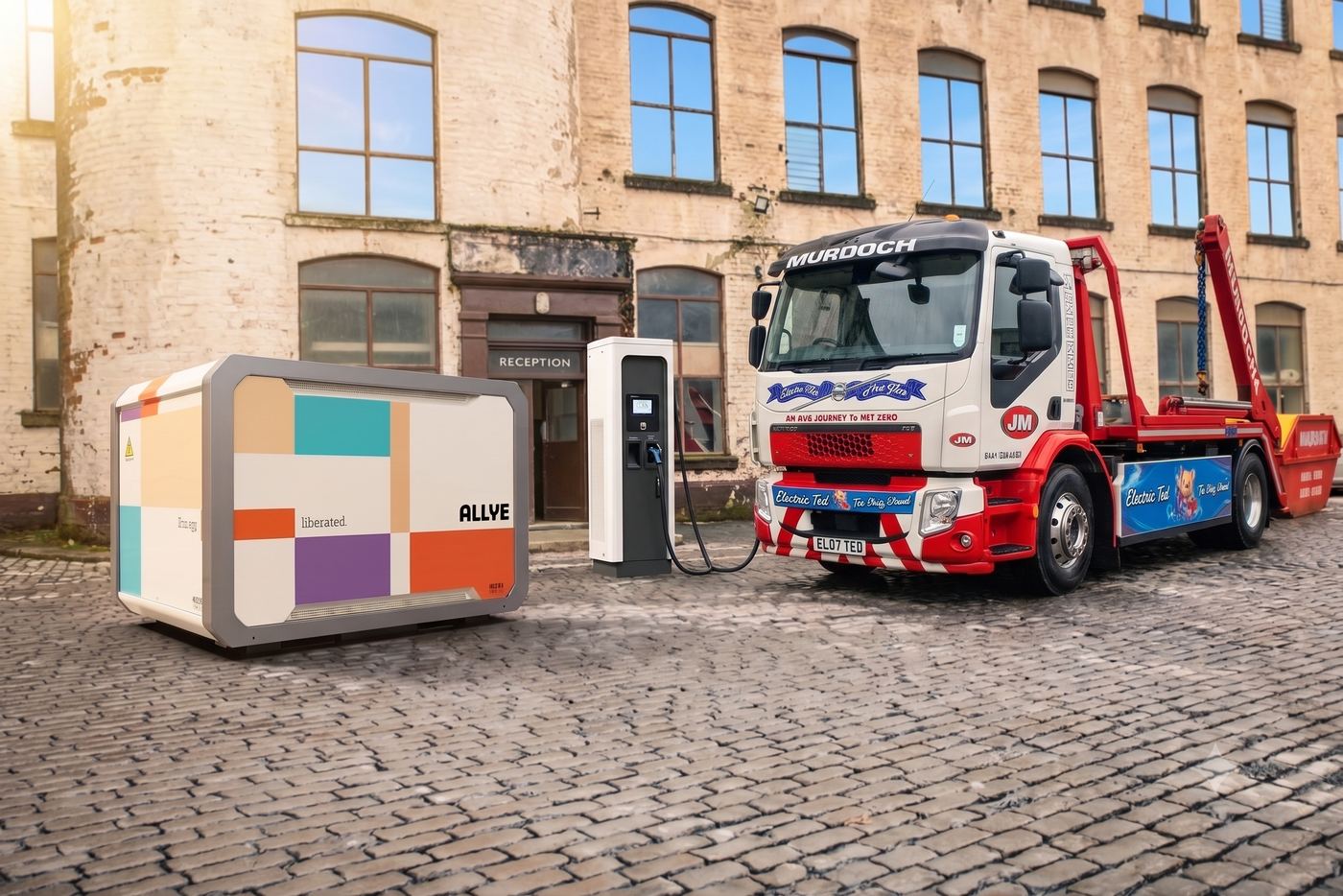
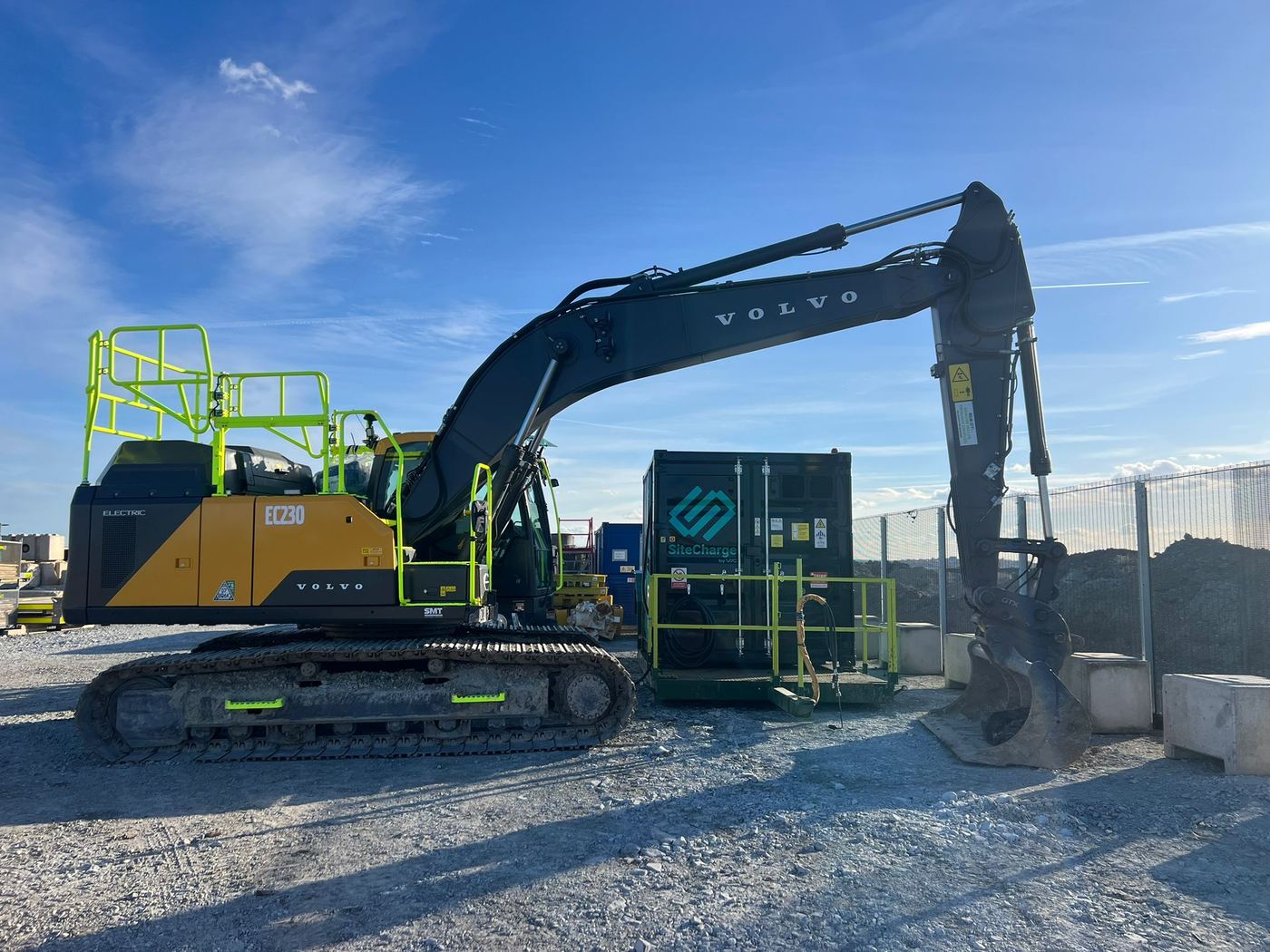
MEV uses the MAX300's independent pack architecture, power electronics and integrated DC fast charging. The MAX range is already charging vehicles across the UK.
Ways to buy
Buy it, or lease it as a service.
Outright purchase
MEV with integrated DC charging starts at £70,000 excluding VAT, depending on specification. Allye handles the site survey, delivery, installation and commissioning.
EV charging as a service
A fully serviced, financed lease for one monthly fee: no capital outlay and no residual risk on the batteries. Add charging as your fleet grows. Ask us for a price.
We are appointing installers, charge point operators and fleet energy specialists to supply, install and support MEV in the UK and internationally.
FAQ
Questions buyers ask
What is the Allye MEV?
A moveable DC rapid charger with its own built-in battery, made from repurposed electric vehicle packs. It charges itself slowly from the supply a depot already has and charges two vehicles fast, at up to 200kW (MEV200) or 300kW (MEV300). The name stands for MAX EV: Allye MAX technology, built to charge vehicles.
What supply does MEV need?
MEV runs on a three-phase supply from 16A to 125A as standard, with a single-phase option for sites where daily energy use is low. The supply sets how quickly MEV recharges, so we recommend at least 32A three-phase for a full overnight recharge.
How many vehicles can one MEV charge in a day?
On a 63A supply over an eight-hour day, one MEV is designed to serve 7 to 10 vehicles at 55 to 70kWh each. Over a day, the supply sets throughput; the battery sets how fast each vehicle charges.
Does MEV need planning permission?
MEV is designed to fit within permitted development at depots and car parks in England, subject to site checks. Rules differ in Wales, close to homes and on the street. We check your site before you order and help with any application, but we can't promise the outcome.
Should I choose MEV or MAX?
If the charger stays put at your depot and only ever charges vehicles, choose MEV. If the energy needs to move, power a site, feed a row of separate chargers or be towed on a standard car licence, choose MAX. Many fleets will use both.
Can I move MEV if my depot moves?
Yes. MEV is fixed in use, bolted to a flush plinth, but it can be unbolted and lifted out by forklift or crane and re-sited, with minimal cost.
When can I get one?
Deliveries are anticipated from Q2 2027, in time for fleets applying to Round 2 of the Department for Transport's Depot Charging Scheme.
Can I pay monthly?
Yes. As well as buying outright, MEV is available as charging as a service: a fully inclusive monthly fee that removes the capital cost. Ask us for a price for your site.
Talk to us about MEV.
Tell us your supply, your vehicles and how long they stand at base. We'll size the MEV, check the siting and price it outright or as a monthly service.
- Your supply size, or a photo of your main fuse board
- Vehicle numbers, battery sizes and dwell times
- A site plan or address so we can check siting
sales@allye.com+44 (0)20 805 06560